
What If YouTube Channel Stats
What If (@whatifscienceshow) is a YouTube channel from United States created on July 18, 2018. As of November 2026, the channel has 8.99M subscribers, 1.77B total views and 1,709 videos. What If uploads about 1.7 videos per week, and its videos average 670.4K views with a 1.31% engagement rate.
Travel from deep space and alien planets to future technology and ancient life on Earth, and discover how small changes in science or history could reshape life, civilization, and the universe. It’s a blend of science education, imagination, and real research that helps you see our world, and the cosmos, from a fresh perspective.
What If Channel Stats & Performance Metrics
- Engagement rate
- 1.31%Likes and comments per view
- Upload frequency
- 1.7 / weekLong-form, last 12 months
- Channel age
- 8 yearsSince July 18, 2018
- Views to subscribers
- 7.5%Avg video views / subscribers
What If Views & Upload Growth
Views earned by videos, grouped by the time they were published. Based on 283 long-form videos published since Sep 2023.
Each bar counts the total views of every video uploaded in that period, so older bars keep growing as those videos keep earning views. Channels that upload many videos a day show a shorter history here.
Best Videos by What If
The most watched, most liked and newest long-form uploads. Shorts are not included.
Most Viewed Videos on What If
-
1
16.97Mviews
-
2
7.02Mviews
-
3
4.27Mviews
-
4
3.69Mviews
-
5
3.31Mviews
-
6
3.29Mviews
-
7
3.28Mviews
-
8
3.12Mviews
-
9
2.98Mviews
-
10
2.89Mviews



Most Liked Videos on What If
-
1
224.2Klikes
-
2
128.5Klikes
-
3
43.2Klikes
-
4
39Klikes
-
5
36.9Klikes
-
6
35.5Klikes
-
7
35Klikes
-
8
34.6Klikes
-
9
30.5Klikes
-
10
30.5Klikes


Latest Videos Uploaded by What If
-
1
206.6Kviews
-
2
111.4Kviews
-
3
174Kviews
-
4
77.4Kviews
-
5
201.1Kviews
-
6
96.6Kviews
-
7
195.5Kviews
-
8
95.7Kviews
-
9
315.7Kviews
-
10
217.4Kviews





All What If Videos
Search and sort every long-form video we analysed for What If.
| Video | Views |
|---|---|
| 206.6K | |
| 111.4K | |
| 174K | |
| 77.4K | |
| 201.1K | |
| 96.6K | |
| 195.5K | |
| 95.7K | |
| 315.7K | |
| 217.4K |
What If Upload Schedule & Content Insights
Uploads on Sunday earn the highest average views. Videos in the 20 to 40 min range perform best. Times are in UTC.
Upload day of week
Number of uploads and average views per video. Most videos go live around 4 PM UTC.
Video length
Average views by video length. Average runtime is 56:51.
Title patterns
How What If writes video titles.
Performance by year
Uploads and views by publish year.
| Year | Uploads | Total views | Avg views |
|---|---|---|---|
| 2026 | 75 | 34.65M | 462K |
| 2025 | 84 | 44.57M | 530.6K |
| 2024 | 96 | 85.9M | 894.8K |
| 2023 | 28 | 24.6M | 878.7K |
Most used video tags
Tags What If uses most often across its videos.
Channel keywords & topics
Keywords set in the channel settings and the topics YouTube assigns.
Popular playlists
Public playlists on the channel, by number of videos.
- Season 1 | What If813 videos
- Shorts589 videos
- Cosmos | What If376 videos
- Planet Earth | What If299 videos
- Humanity | What If198 videos
- Your Body | What If196 videos
- Compilations139 videos
- Technology | What If74 videos
About What If YouTube Channel
- What If is a science-based hypothetical YouTube channel focused on space, technology, Earth, prehistoric life, and big-picture future scenarios.
- The channel’s public description says each episode starts with a “what if” question and then follows real scientific theory, physics, biology, and astronomy to explore possible outcomes.
- The channel is presented as a show fronted by Peter, with the brand centered on curious, research-driven explanations rather than pure entertainment.
- Publicly reported profiles identify the channel as being produced by Underknown, a digital media studio, with Peter Schmiedchen serving as the narrator and manager.
- The channel mixes education, animation, and speculative storytelling to make complex science feel accessible and cinematic.
How What If Grew: Story and Strategy
- What If launched on July 18, 2018 and quickly established a recognizable premise built around one hypothetical question per episode.
- The channel grew by packaging science topics as high-concept “what if” scenarios that are easy to click and easy to explain.
- Its breakout strategy has been combining extreme curiosity gaps with real scientific framing, which makes the videos feel both dramatic and credible.
- The most popular uploads lean into universal ideas like death, planets, future civilization, and prehistoric monsters, which broaden audience appeal beyond typical science viewers.
- The channel has kept output consistently high, with a reported upload rhythm of about 1.7 videos per week, helping it stay visible in recommendations.
- Publicly reported profiles also point to a broader production system around Underknown, which suggests the channel benefits from a studio-style workflow rather than a one-person upload model.
- Its long-term growth appears tied to series consistency, strong title formulas, and repeatable thumbnails that promise a dramatic science answer quickly.
Why What If's Top Videos Went Viral
- What If You DIED on Every Planet in Our Solar System? worked because it combines a universal fear with an instantly understandable premise, making the hook both shocking and simple.
- The same video also benefits from a title that promises a fast comparison across multiple planets, which creates a strong curiosity loop and encourages retention.
- What If You Landed on Kepler-22 b? performed well because it uses a real exoplanet name, giving the video a sense of scientific legitimacy while still feeling mysterious and unfamiliar.
- What If The Megalodon Never Stopped Evolving? worked by attaching a famous prehistoric creature to an escalation concept, which is especially effective for viewers who enjoy “monster plus science” framing.
- These top videos all succeed by pairing vivid imagery, extreme stakes, and a science explanation that makes the scenario feel plausible enough to explore.
What If's Content Strategy
- What If relies on a fixed title formula that always begins with the brand phrase, which makes the channel instantly recognizable in search and suggested feeds.
- The channel covers a wide range of categories, including space, future technology, Earth changes, prehistoric biology, and civilization-scale theories, giving it multiple audience entry points.
- Its packaging is built around dramatic scenarios, usually involving danger, scale, or cosmic uncertainty, which helps thumbnails and titles communicate the stakes immediately.
- The upload pattern is consistent and high-volume, which helps the channel maintain momentum and gives it many chances to surface evergreen hits.
- The brand appears to favor standalone episodes over loose playlists, so each upload can function as its own shareable “event” video.
- The format is especially effective for evergreen search because the topics do not depend on current news and remain interesting for years.
Who Watches What If
- Science-curious viewers who enjoy simplified explanations of astronomy, physics, biology, and future tech.
- Teen and adult audiences who like speculative “what if” storytelling with a documentary feel.
- Fans of space, dinosaurs, extinction events, and civilization-scale thought experiments.
- Viewers who want educational content that feels entertaining, fast-paced, and visually dramatic.
- People who discover the channel through extreme title hooks and then keep watching for the scientific explanations.
What If Timeline: Key Milestones
The moments that shaped the channel.
- 2018What If launched on YouTube on July 18, introducing its science-based hypothetical format.
- 2018The channel began using a repeatable title structure built around the phrase “What If,” creating strong brand recognition.
- 2019The channel’s mix of animation, narration, and science explanation became its core production style.
- 2020What If expanded its audience with larger-scale cosmic and future-tech episodes that pushed the format beyond simple curiosities.
- 2021The channel’s library crossed into a high-volume back catalog, strengthening search and recommendation performance.
- 2022View counts on its biggest evergreen videos showed that extreme hypothetical scenarios could sustain long-term traffic.
- 2023The brand continued broadening into podcast and multi-format extensions around the What If concept.
- 2024The channel maintained a steady publishing pace while continuing to mix space, Earth history, and speculative science.
- 2026Public channel stats show 8.99 million subscribers, 1.77 billion total views, and 1,709 uploaded videos.
What If Strengths & Growth Opportunities
Strengths
- Very strong and consistent brand identity built around one repeatable premise.
- High evergreen appeal because the topics remain interesting long after upload.
- Broad topic range across space, Earth, prehistoric life, and future technology.
- Clear blend of entertainment and science, which widens the channel’s audience.
Opportunities
- Expand more clearly into series formats that group episodes by theme, such as planets, extinction events, or future civilizations.
- Increase multilingual reach with localized uploads or subtitles for non-English audiences.
- Build more cross-platform funnels through podcast clips, Shorts, and educational social snippets.
- Develop more collaborations with scientists, educators, or space-focused institutions to deepen authority and variety.
Brand Collaboration Potential of What If
- The channel is a strong fit for science, education, astronomy, STEM, museum, and documentary brands because its audience already expects fact-based explanations.
- It can integrate sponsor messages naturally through scenario framing, such as using a brand in a future-tech, space, or research context.
- Brands with visual products can benefit from the channel’s cinematic presentation and high retention storytelling.
- The format is useful for educational campaigns because it turns abstract subjects into memorable, shareable narratives.
- Science-adjacent companies could use the channel for topical explainers that feel entertaining rather than promotional.
YouTube Channels Similar to What If
Creators with comparable formats and audiences.
Frequently Asked Questions About What If
How many subscribers does What If have?
As of November 2026, What If has 8,990,000 subscribers on YouTube (8.99M). YouTube rounds public subscriber counts, so the exact number can differ slightly from what you see on the channel page.
How many views does What If have in total?
What If has received 1,772,108,051 total views (1.77B) across 1,709 public videos. That works out to roughly 1.04M lifetime views per upload, including Shorts.
How many videos has What If uploaded?
What If has uploaded 1,709 public videos. We analysed the latest 600 uploads: 283 were long-form videos and 317 were Shorts, which are excluded from the averages on this page.
When was What If created on YouTube?
The What If YouTube channel was created on July 18, 2018, so it is 8 years and 4 months old.
Where is What If based?
What If lists United States as its country on YouTube.
What is the average number of views per video for What If?
Videos on What If average 670,419 views (670.4K), with a median of 348.7K views per video. The average is 7.5% of the subscriber count, which shows how much of the audience watches each upload.
What is the engagement rate of What If?
What If has an engagement rate of 1.31%, calculated by YTGrowAI as (likes + comments) divided by views across 283 long-form videos. This is our own calculation from public data and not an official YouTube statistic.
How often does What If upload new videos?
Over the last 12 months What If has published 88 long-form videos, which is 1.7 videos per week. Most uploads go live on Wednesday, and Sunday uploads have earned the highest average views.
What is the most viewed video on What If?
The most viewed video on What If is "What If You DIED on Every Planet in Our Solar System?" with 16,972,825 views, published on Dec 25, 2024.
What is the latest video from What If?
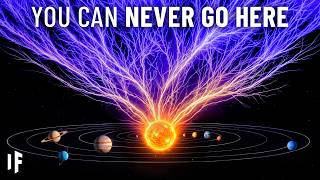
The most recent long-form upload we found is "Why it’s impossible to go above and below the Solar System", published on Nov 6, 2026, which has 206,630 views so far.
Is What If growing or declining?
What If currently shows a "downtrend" pattern. Its 10 newest settled videos average -39% views compared with the 10 videos before them. Momentum can swing quickly, because one viral video changes the average.
What video length works best for What If?
What If videos in the 20 to 40 min range earn the highest average views. The channel's average long-form video runs about 57 minutes.
Who runs the What If YouTube channel?
What If is publicly associated with Peter Schmiedchen, who is identified in third-party profiles as the narrator and manager of the channel. The brand itself is also described as a production from Underknown, a digital media studio. What If is therefore best understood as a studio-backed science channel with Peter as the on-screen voice and guide. The channel description also says “Join Peter,” which reinforces that he is the face most viewers associate with What If.
What is the real name of the What If creator?
The creator most commonly identified with What If is Peter Schmiedchen. Publicly reported channel profiles and related What If pages describe him as the voice and manager behind the science series. What If uses Peter as the on-screen narrator for the hypothetical scenarios, making him the channel’s most visible personality. The channel brand is built around his delivery style, but the content itself is presented as a studio-produced science show rather than a casual personal vlog.
How old is the What If channel?
What If was created on July 18, 2018, so the channel is eight years old as of November 2026. It grew quickly around its simple premise of asking “what if” questions and then answering them with science-based reasoning. What If has built a very large archive since launch, with more than 1,700 uploads listed in public stats. That long running history helps explain why the channel has so many evergreen videos that continue to attract views.
How did What If get famous?
What If became well known by turning science into high-concept hypothetical questions that are easy to understand and hard to ignore. The channel’s formula is simple: ask a dramatic “what if” question, then explain the outcome with real science, physics, biology, and astronomy. What If also benefits from strong packaging, with titles that create instant curiosity and thumbnails that signal danger or scale. That combination helped the channel stand out as both educational and entertaining.
What is the biggest What If video?
The biggest publicly listed What If video is What If You DIED on Every Planet in Our Solar System?, with 16,972,825 views. It stands out because the title uses a universal human fear and combines it with a familiar setting, the solar system, making the premise instantly clickable. What If has many other top performers, but this one appears to be the channel’s most viewed upload in the provided stats. The video’s success reflects the channel’s strength in dramatic, science-based curiosity hooks.
Where does What If live?
Publicly reported channel profiles identify What If as a Canadian YouTube channel, and the creator Peter Schmiedchen is also associated with Canada. What If’s YouTube channel metadata lists the country as US, which reflects the channel’s platform setting rather than a detailed personal address. No reliable public source in the provided information gives a specific home city or private residence. What If should therefore be described cautiously as a Canadian-linked channel with public platform settings tied to the United States.
Has What If had any controversies?
No major public controversy is established in the provided source material for What If. The channel is generally described as an educational science brand focused on hypothetical scenarios, and its public identity centers on research-driven explanations rather than drama. What If also avoids the kind of personal-vlog controversy that often follows creator-led channels because it functions more like a studio science series. Without verified reporting, it would be inaccurate to claim a controversy where none is clearly documented.
What are channels similar to What If?
Several channels are similar to What If in format or audience appeal. xkcd’s What If? is the closest conceptual match because it also answers absurd hypothetical questions with science. Kurzgesagt – In a Nutshell shares the polished animation and big-science storytelling style. Veritasium and SciShow are also good comparisons because they turn complex science into accessible video essays. What If fits within a broader ecosystem of curiosity-led educational channels with strong visual packaging.
What is the What If upload schedule?
Public channel stats for What If show an upload rhythm of about 1.7 videos per week. That means the channel publishes consistently but not daily, which is a strong pace for a heavily produced science format. What If has also accumulated a very large video library, so the current schedule sits on top of years of back-catalog growth. The mix of regular posting and evergreen topics helps What If remain visible in both search and recommendations.
Which What If videos should I watch first?
A good starting point for What If is What If You DIED on Every Planet in Our Solar System? because it captures the channel’s core style in one video. What If You Landed on Kepler-22 b? is another strong pick because it shows how the channel handles real exoplanet science. What If The Megalodon Never Stopped Evolving? is also a good entry point if prehistoric life is more appealing. These videos show exactly why What If works: dramatic hooks, accessible science, and a clear answer to a strange question.
Explore More YouTube Channel Stats
Compare What If with other channels we track.








Statistics come from the public YouTube Data API. Engagement rate, averages and trend labels are independent calculations calculated by YTGrowAI and are not official YouTube metrics. Shorts are excluded from averages. Background information is AI-assisted and based on public sources, so verify important facts before relying on them.
Look up another YouTube channel
Enter a channel name or handle to get its stats, top videos and growth insights.